Tree Care Solutions
The Complete Guide to Nurturing Healthy, Thriving Trees
Whether you’ve just planted a single sapling in your garden or manage a property with established trees, understanding proper tree care is essential for ensuring their health, safety, and longevity. Trees are living assets that provide shade, beauty, and environmental benefits, but they require knowledgeable attention through every stage of their life. This guide combines essential maintenance practices with the crucial knowledge of when to call in the experts.
Foundational Principles: The “Right Tree, Right Place” Philosophy
Successful tree care begins before the tree is even in the ground. The most important concept, often stressed by leading arboreal organizations, is “Right Tree, Right Place.” This means selecting a species whose mature size, light requirements, and soil preferences perfectly match the conditions of your planting site.
-
Consider its purpose: Are you planting for aesthetics, privacy, shade, or as a windbreak? Your goal will determine the best species.
-
Evaluate site limitations: Assess the available space for mature height and spread, the sun exposure throughout the day, and your soil type and drainage. For example, large deciduous trees planted to the south or west can provide cooling summer shade without blocking the welcome winter sun.
Essential Maintenance Practices for Healthy Trees
Once properly planted, consistent care is vital, especially in the tree’s formative years, as early practices will shape its strength and lifespan.
1. Watering: The Key to Establishment
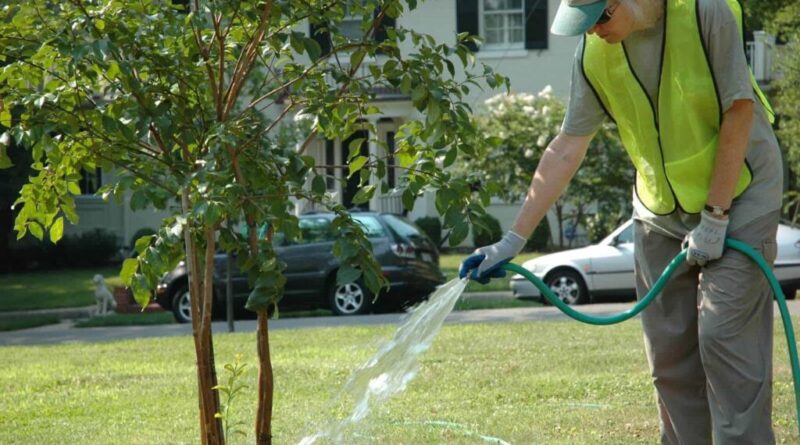
Newly planted trees need consistent, deep watering for at least their first 2-3 years to establish a strong root system. The goal is to keep the soil moist but not waterlogged. A good rule of thumb is to water deeply once a week, adjusting based on rainfall. Check the soil at the “drip line” (the area under the outermost branches) about 6 inches down—it should be damp enough to form a ball but not soggy. Using a soaker hose or a tree watering bag can help deliver a slow, deep soak directly to the roots.
2. The Art and Science of Mulching
Mulching is one of the most beneficial things you can do for a tree. A proper layer of mulch conserves soil moisture, suppresses weeds, moderates soil temperature, and protects the trunk from lawn equipment.
-
How to do it right: Remove grass in a 3- to 10-foot ring around the tree, depending on its size.
-
Apply a 2- to 4-inch layer of natural mulch, such as wood chips or bark pieces.
-
Crucially, keep the mulch from touching the tree trunk. Piling mulch against the trunk (creating a “volcano mulch”) can lead to rot, disease, and pest infestation.
3. Pruning: Strategic Cuts for Structure and Health
Pruning is essential for maintaining a tree’s structure, health, and safety, but it must be done correctly.
-
For young trees: Focus on removing only damaged, dead, or crossing/rubbing branches.
-
Timing: The best time to prune for shaping and encouraging growth is during dormancy in winter. For flowering trees, prune just after blooms fade.
-
A key rule: Avoid the temptation to severely prune a newly planted tree. Nursery-grown trees have typically received proper structural pruning, and over-pruning after planting can cause significant stress.
4. Special Considerations and Seasonal Care
-
Fertilization: Generally, do not fertilize a new tree in its first year. After establishment, fertilizing is not always necessary but can be beneficial in poor soils. Always use a slow-release formula and follow instructions carefully.
-
Winter Protection: In colder climates, wrapping the trunk of a young, thin-barked tree in late fall can protect it from frost cracks and sunscald. Be sure to remove the wrap in spring.
-
Staking: Contrary to popular belief, staking is often unnecessary and can prevent a tree from developing a strong, resilient trunk. Stake only if the tree is in an extremely windy site or cannot support itself.
When to Call a Professional Arborist
While many aspects of tree care are manageable for homeowners, certain situations require the skill, experience, and equipment of a certified professional.
-
Diagnosing Health Issues: Symptoms like widespread dieback, unusual leaf spots, or pest infestations can be challenging to identify accurately.
-
Pruning Large or Mature Trees: Pruning high branches, especially near power lines or structures, is dangerous work best left to trained experts.
-
Storm Damage Assessment and Repair: After severe weather, a professional can safely remove hazardous hanging limbs and assess whether a damaged tree can be saved.
-
Tree Removal: When a tree is dead, diseased beyond recovery, or poses a safety risk, safe removal is critical.
For expert assessment and professional tree care services in Ireland, CLICK HERE to consult with the certified arborists at O’Kennedy Tree Care. They handle everything from health diagnostics and precision pruning to safe removals, ensuring your trees are managed safely and effectively.
Advanced Care and Long-Term Planning
As your trees mature, their needs evolve. Consider these aspects for long-term stewardship:
-
Monitoring for Pests and Disease: Stay vigilant for signs of trouble, as issues vary significantly by region. Early detection is key to management.
-
Storm Preparedness: Much of the worst storm damage to trees and property can be prevented with proactive care, like proper pruning to create a strong structure.
-
Understanding Your Tree’s Profile: Refer to care tags or guides to understand your tree’s specific needs for sunlight, hardiness, mature size, and deer resistance.
By following these fundamental and advanced practices, you invest in the health and beauty of your trees for decades to come. Remember, a thriving tree is not an accident—it’s the result of informed care and timely professional partnership.